ZZTool
Metric Thread Size Chart (ISO Metric Threads)
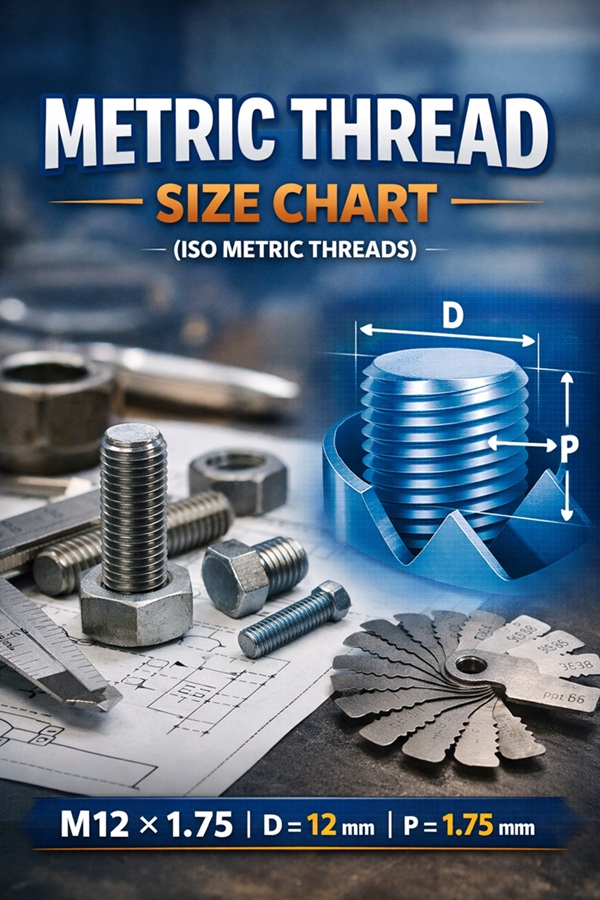
Metric threads are the most widely used screw thread standard in the world. They are commonly found in mechanical engineering, manufacturing, construction, automotive applications, and everyday hardware. Understanding metric thread specifications is essential for selecting the correct bolts, screws, and nuts.
This article explains the basics of metric threads and provides a practical metric thread size chart for quick reference.
What Is a Metric Thread?
A metric thread is a screw thread standardized by the International Organization for Standardization (ISO) and measured in millimeters (mm). Metric threads are identified by the letter M, which stands for Metric.
Example:
- M8 × 1.25
- M10 × 1.5
These designations clearly define the thread’s size and spacing.
Metric Thread Naming Convention
The standard format for metric threads is:
M + Nominal Diameter × Pitch
Parameter Explanation
- M – Metric thread
- Nominal Diameter – Outside diameter of the thread (mm)
- Pitch – Distance between adjacent thread peaks (mm)
Example
M6 × 1.0
- Nominal diameter: 6 mm
- Pitch: 1.0 mm
If the pitch is not specified, it usually refers to a coarse thread, which is the default ISO standard.
Coarse vs. Fine Metric Threads
| Type | Characteristics | Typical Applications |
|---|---|---|
| Coarse Thread | Larger pitch, stronger, more resistant to damage | General-purpose fastening |
| Fine Thread | Smaller pitch, higher precision, better anti-loosening | Precision machinery, thin-walled parts |
Metric Coarse Thread Size Chart (ISO)
Below is a commonly used ISO metric coarse thread size chart:
| Thread Size | Nominal Diameter (mm) | Pitch (mm) |
|---|---|---|
| M2 | 2.0 | 0.4 |
| M2.5 | 2.5 | 0.45 |
| M3 | 3.0 | 0.5 |
| M4 | 4.0 | 0.7 |
| M5 | 5.0 | 0.8 |
| M6 | 6.0 | 1.0 |
| M8 | 8.0 | 1.25 |
| M10 | 10.0 | 1.5 |
| M12 | 12.0 | 1.75 |
| M14 | 14.0 | 2.0 |
| M16 | 16.0 | 2.0 |
| M20 | 20.0 | 2.5 |
| M24 | 24.0 | 3.0 |
| M30 | 30.0 | 3.5 |
Common Metric Fine Thread Examples
Fine threads must always be specified with a pitch:
| Thread Size | Nominal Diameter (mm) | Pitch (mm) |
|---|---|---|
| M8 × 1.0 | 8.0 | 1.0 |
| M10 × 1.25 | 10.0 | 1.25 |
| M10 × 1.0 | 10.0 | 1.0 |
| M12 × 1.25 | 12.0 | 1.25 |
| M12 × 1.5 | 12.0 | 1.5 |
Typical Applications of Metric Threads
Metric threads are used across a wide range of industries, including:
- Mechanical and industrial equipment
- Automotive and motorcycle manufacturing
- Construction and structural engineering
- Consumer hardware and DIY products
- Electronics and precision instruments
How to Choose the Right Metric Thread
When selecting a metric thread, consider the following factors:
- Load and strength requirements
- Available installation space
- Vibration and anti-loosening needs
- Compatibility with existing components
- Compliance with international standards
Summary
Metric threads provide a standardized, reliable fastening solution used worldwide. By understanding thread naming conventions, coarse vs. fine threads, and common size charts, you can confidently choose the correct fastener for any application.
A well-organized metric thread size chart is an essential reference for engineers, technicians, and anyone working with mechanical components.