ZZTool
Understanding BMI: Your Complete Guide to Body Mass Index Calculation
Body Mass Index (BMI) is one of the most widely used health metrics for assessing whether a person's weight falls within a healthy range. Whether you're starting a fitness journey, monitoring your health, or simply curious about what your numbers mean, understanding BMI is an essential first step.
What is BMI?
BMI, or Body Mass Index, is a numerical value calculated from your height and weight. It provides a quick screening tool to categorize individuals into weight status categories: underweight, normal weight, overweight, and obese. The formula is simple:
BMI = Weight (kg) ÷ Height² (m²)
For example, if you weigh 70 kg and are 1.75 meters tall, your BMI would be: 70 ÷ (1.75 × 1.75) = 22.9
BMI Categories Explained
Understanding where your BMI falls helps you assess your current health status:
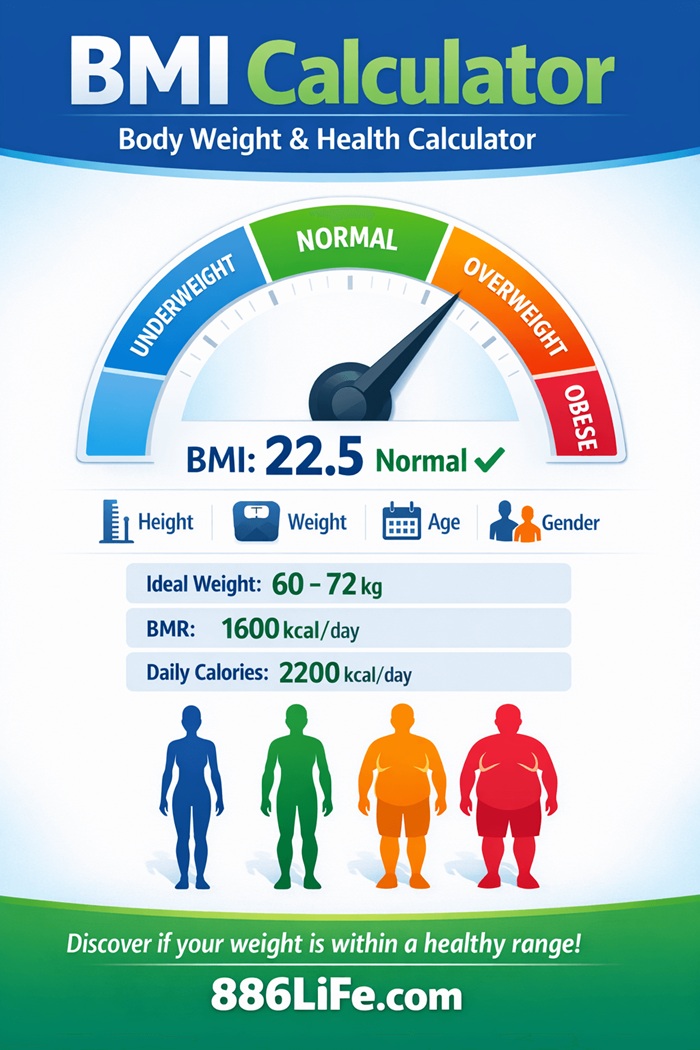
| Category | BMI Range |
|---|---|
| Underweight | Below 18.5 |
| Normal Weight | 18.5 - 24.0 |
| Overweight | 24.0 - 27.0 |
| Obese Class I | 27.0 - 30.0 |
| Obese Class II | 30.0 - 35.0 |
| Obese Class III | Above 35.0 |
Note: These ranges follow Asian BMI standards, which have slightly lower thresholds than Western standards due to differences in body composition and health risks.
Beyond BMI: Other Important Metrics
While BMI is useful, it doesn't tell the whole story. Here are other metrics worth knowing:
Basal Metabolic Rate (BMR)
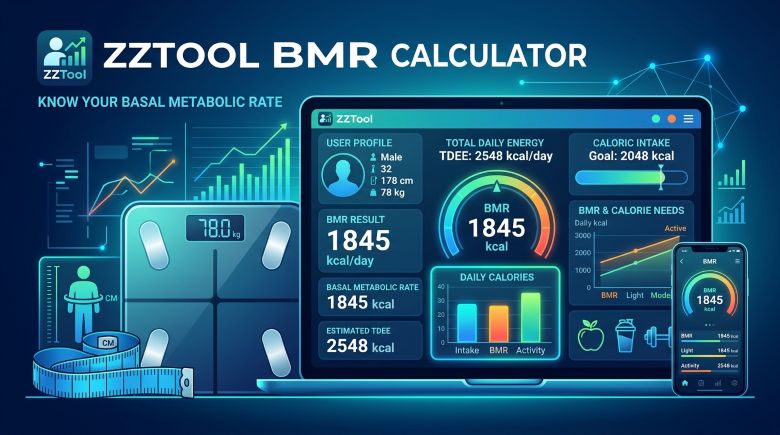
BMR represents the number of calories your body burns at rest to maintain basic functions like breathing, circulation, and cell production. The Mifflin-St Jeor equation is commonly used:
- Men: BMR = 10 × weight(kg) + 6.25 × height(cm) - 5 × age + 5
- Women: BMR = 10 × weight(kg) + 6.25 × height(cm) - 5 × age - 161
Total Daily Energy Expenditure (TDEE)
TDEE accounts for your activity level and represents the total calories you burn daily. It's calculated by multiplying your BMR by an activity factor:
- Sedentary (little/no exercise): BMR × 1.2
- Lightly active (1-3 days/week): BMR × 1.375
- Moderately active (3-5 days/week): BMR × 1.55
- Very active (6-7 days/week): BMR × 1.725
- Extra active (physical job): BMR × 1.9
Ideal Weight Range
Your ideal weight range is typically where your BMI falls between 18.5 and 24. This gives you a target range rather than a single number, which is more realistic and sustainable.
Limitations of BMI
While BMI is a helpful screening tool, it has limitations:
- Doesn't distinguish muscle from fat - Athletes may have high BMI due to muscle mass
- Doesn't account for body composition - Two people with the same BMI can have very different body fat percentages
- Age and gender variations - Older adults and women naturally have different body compositions
- Ethnic differences - Health risks associated with BMI vary across populations
Tips Based on Your BMI
If You're Underweight (BMI < 18.5)
Focus on nutrient-dense foods, increase caloric intake gradually, and consider strength training to build muscle mass. Consult a healthcare provider to rule out underlying conditions.
If You're Normal Weight (BMI 18.5-24)
Maintain your healthy habits! Continue balanced eating and regular physical activity. Focus on overall wellness rather than just weight.
If You're Overweight (BMI 24-27)
Small lifestyle changes can make a big difference. Increase physical activity, reduce processed foods, and focus on portion control. Even a 5-10% weight reduction can improve health markers.
If You're Obese (BMI > 27)
Consider working with healthcare professionals to develop a comprehensive plan. Focus on sustainable changes rather than quick fixes. Medical interventions may be appropriate in some cases.
How to Use a BMI Calculator
Modern BMI calculators do more than just compute your BMI. They typically provide:
- Your exact BMI value
- Your weight category
- Your ideal weight range
- BMR calculation
- TDEE estimation
- Personalized suggestions
Simply input your height, weight, age, gender, and activity level to get a comprehensive health snapshot.
Conclusion
BMI remains a valuable starting point for understanding your weight status and potential health risks. However, it should be used alongside other metrics and professional medical advice for a complete picture of your health. Remember, the goal isn't just a number—it's overall wellness and quality of life.
Use our free BMI Calculator to get your personalized results and start your journey toward better health today!
Disclaimer: BMI is a screening tool and not a diagnostic measure. Always consult healthcare professionals for personalized medical advice.